Hierarchical Symbolic Music Generation : Step 1 - Chord
Project Description
Period: Undergraduate / Research Intern (Mar. 2024 - Jun. 2024)
This research aims to design a model for Multi-Track Symbolic Music Generation.
The generation process is organized hierarchically, and this project focuses on the first stage: Chord Generation.
Github Model Code : https://github.com/ongdyub/ChordGeneration/blob/main/src/model/transformer.py
Problem Definition
In the current Multi-Track Symbolic Music Generation field, most work treats 4 to 8 tracks as the main task. For cases with 12 or more tracks, “SymphonyGen,” published at ISMIR 2022, is known as the current SOTA model.
However, that model generates many symbolic tokens by flattening them with a Linear Transformer. I judged that this approach does not sufficiently reflect the properties and structural characteristics of music, so I aimed to design a domain-specific model that incorporates musical knowledge.
Proposed Structure
Considering the way music is composed and the form of completed pieces, music can be viewed as being organized in phrase units. Therefore, rather than generating measure-level tokens in a flattened sequence with a Linear Transformer, I considered it more reasonable to generate the broad structure first through a hierarchy.
Another goal of this research is to find model structures that fit the musical elements in each generation stage, rather than using one Transformer to generate everything at once.
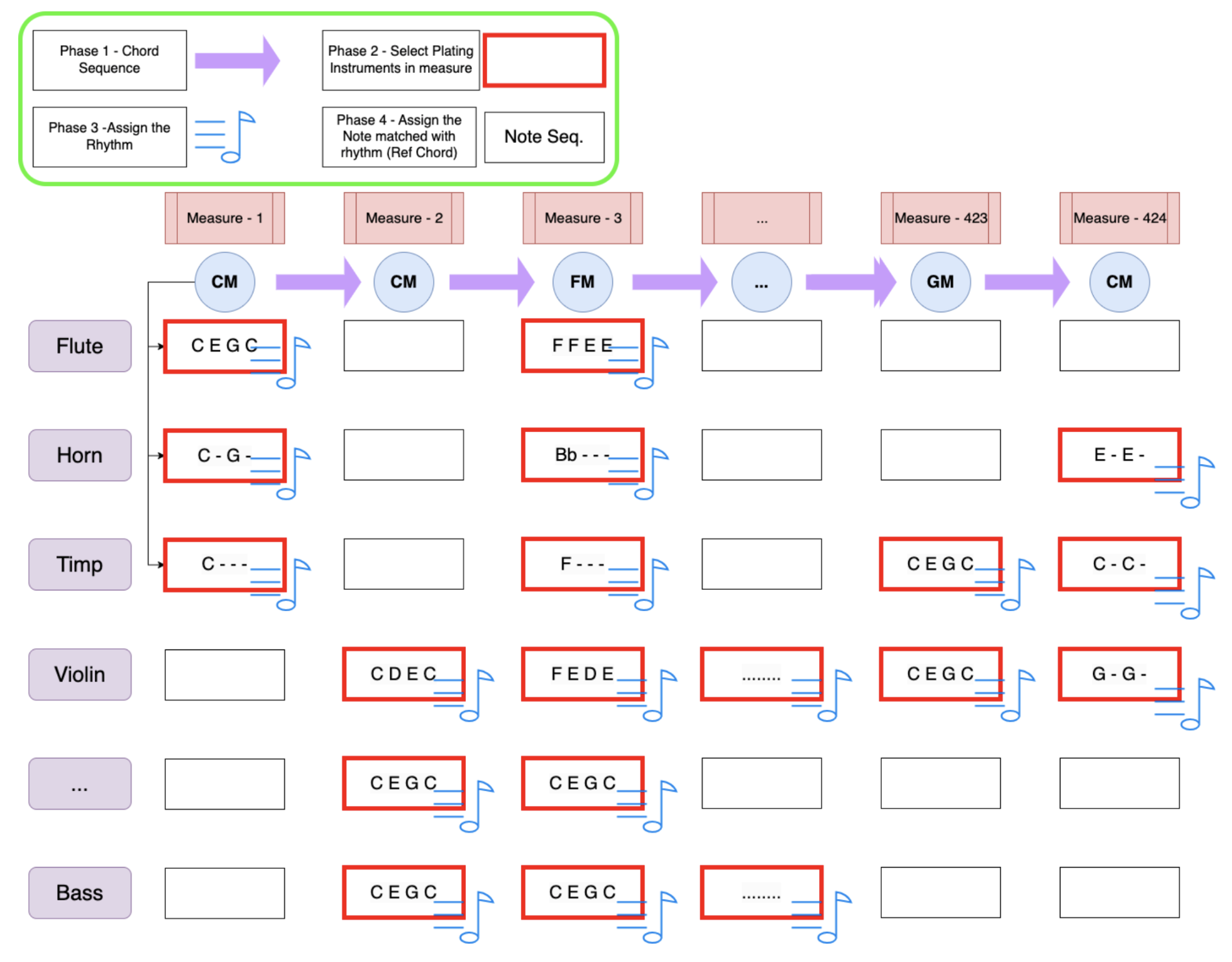
The overall generation phase was designed as shown below.
Step 1 : Chord Generation
Generate the main chord for one measure.
Step 2 : Instrument Select
Select the instruments to be played in the measure.
Step 3 : Rhythm Generation
Generate the rhythm that each instrument will play in the measure.
Step 4 : Note Assign
Assign notes related to the chord to the generated rhythm.
Chord Generation
In symbolic music, the token types used directly in a MIDI file are {track, instrument type, note, beat}.
However, the most important element in constructing a piece is chord progression, so I selected Chord Generation as the first phase.
Compared with SymphonyGen, which was used as the baseline, the proposed model performed better in terms of generation length, musical information, distribution, and efficiency.
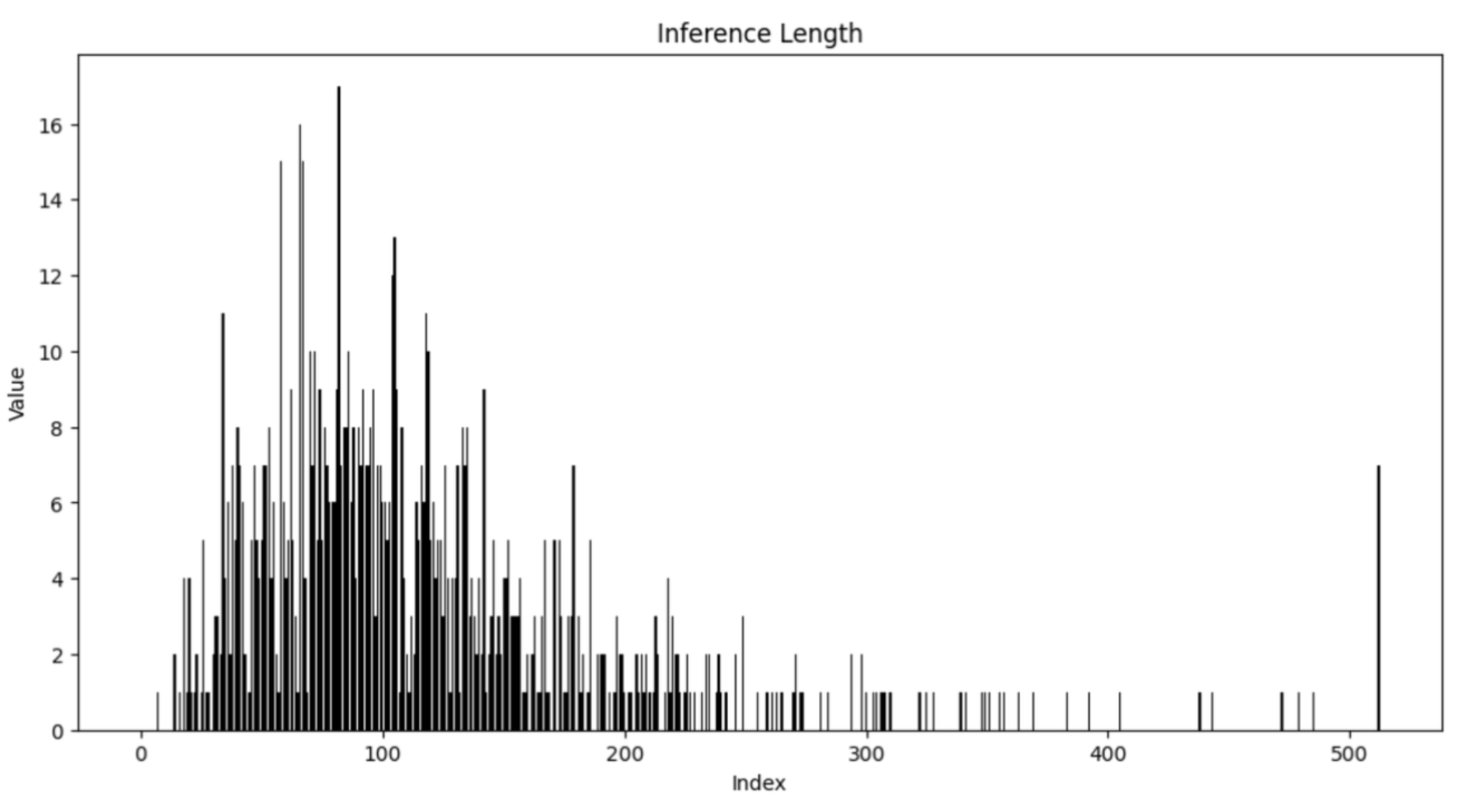
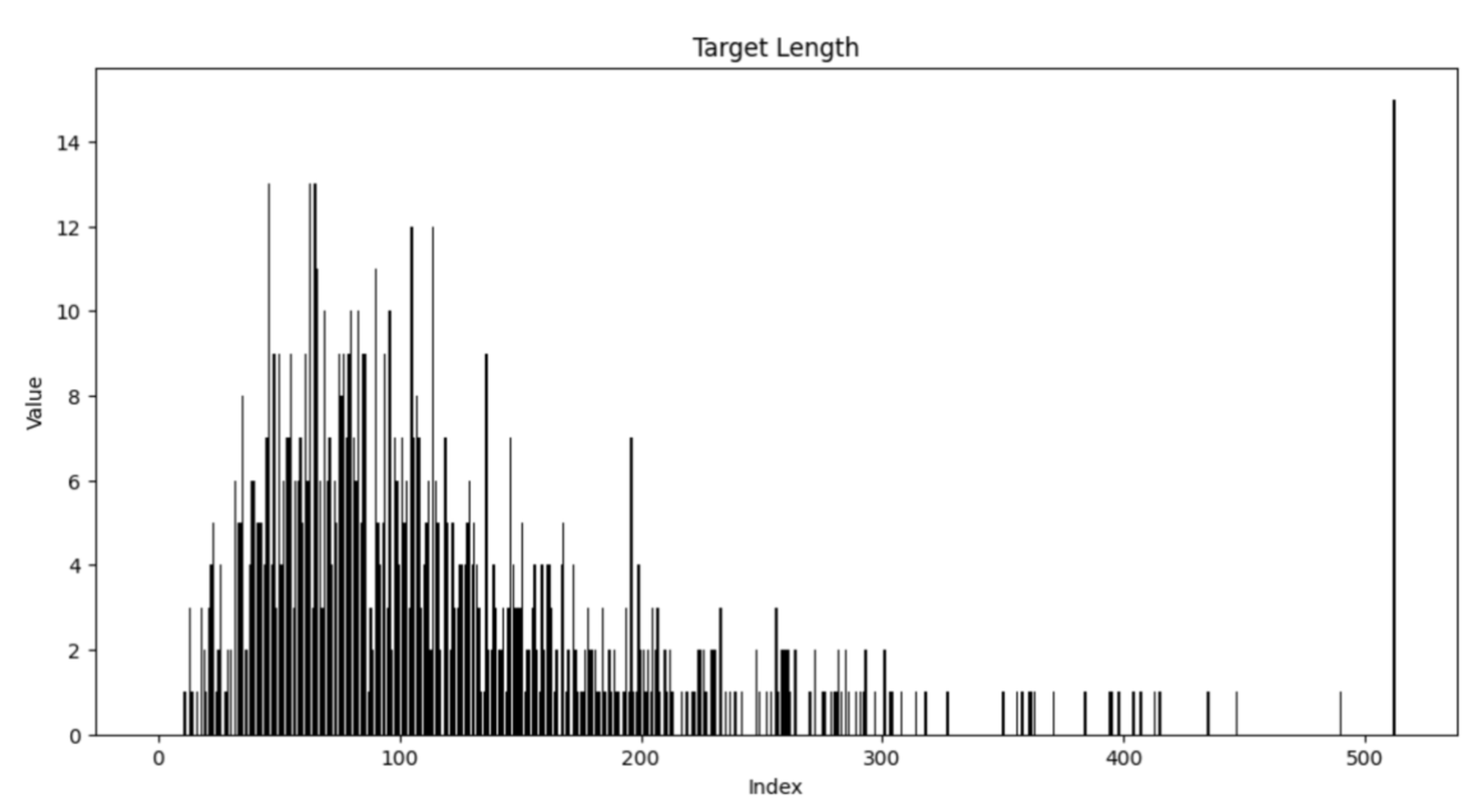
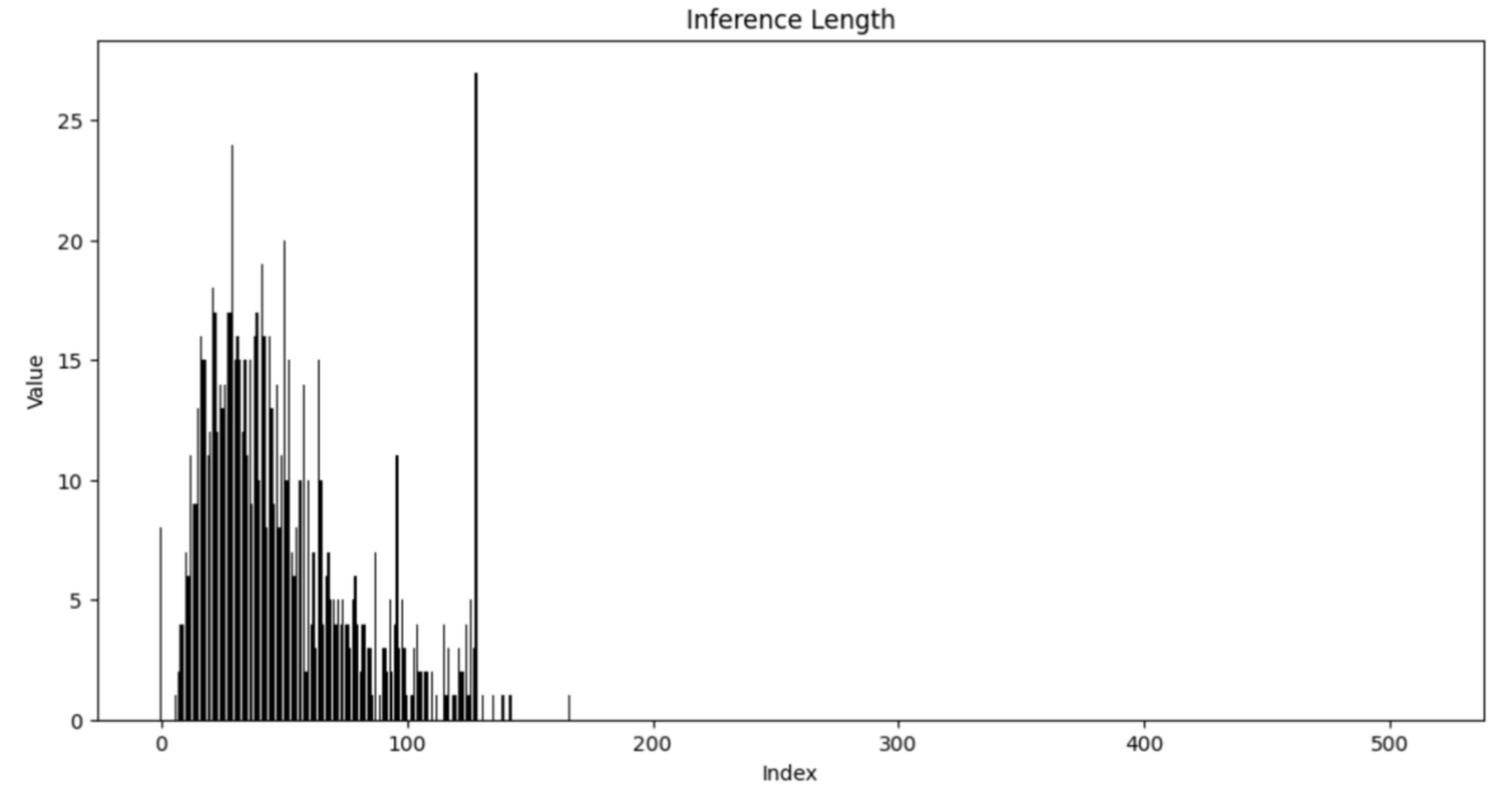
Generation Length
Even with the same dataset, the baseline generated outputs with limited lengths, while the proposed model showed a distribution similar to the target. The graph below shows the lengths of generated pieces when five measures from the test set were used as prompts.
The x-axis represents the number of generated measures, and the y-axis represents the number of generated pieces with that measure count.
Transformer Can Catch Musical Information
There are many Transformer-based models, and papers such as Structured Inform, FME, and FMS explicitly add musical elements to the model. However, these approaches are all designed for generating everything “at once.”
When learning only chord sequences, I showed that the model can learn musical information without additional elements.
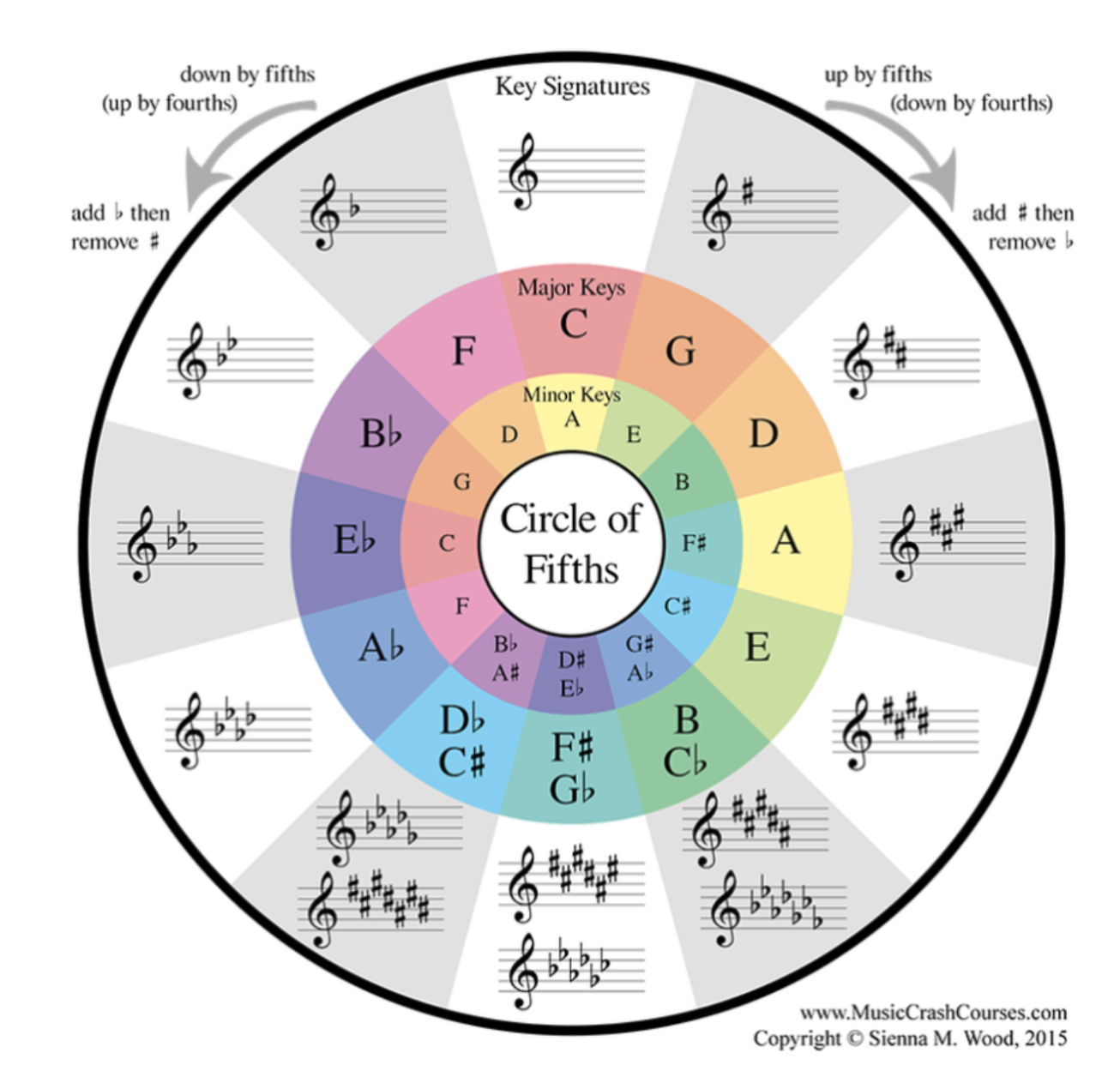
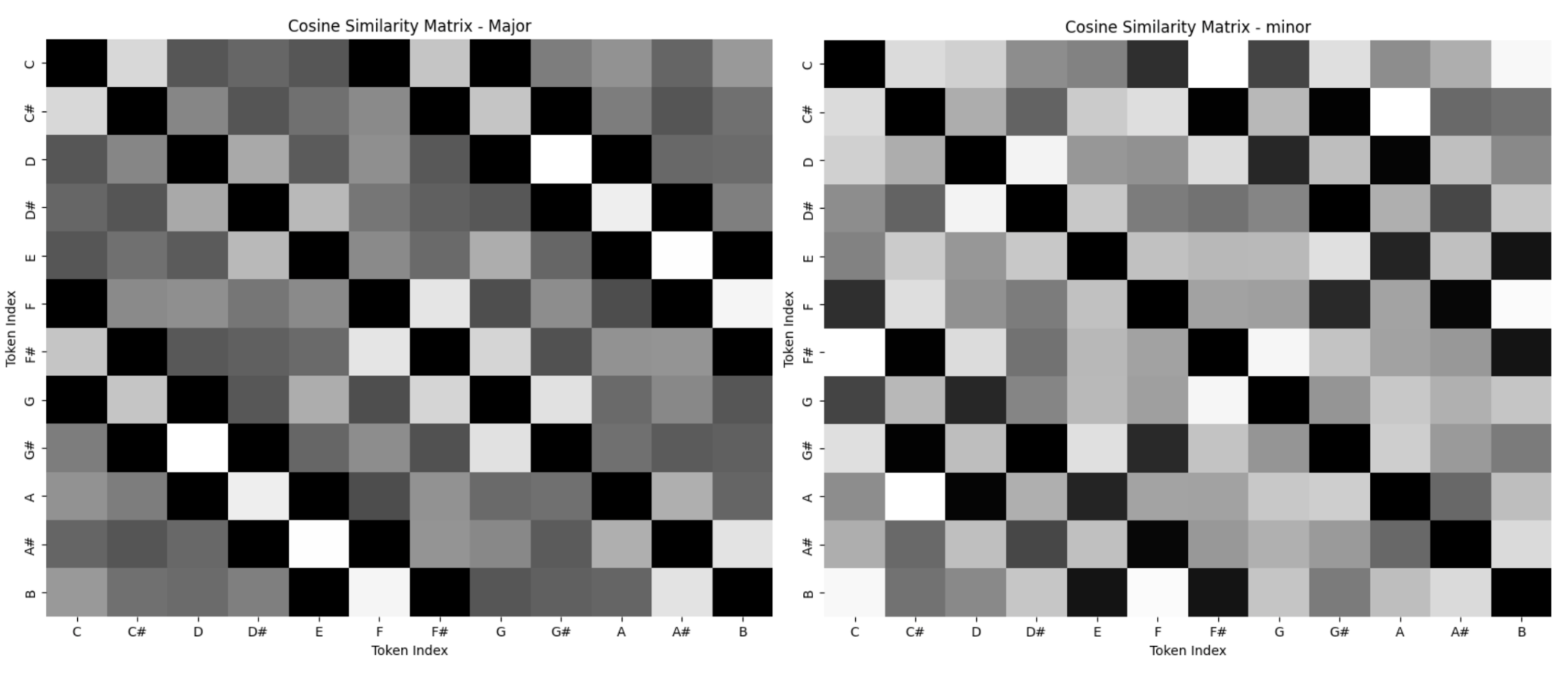
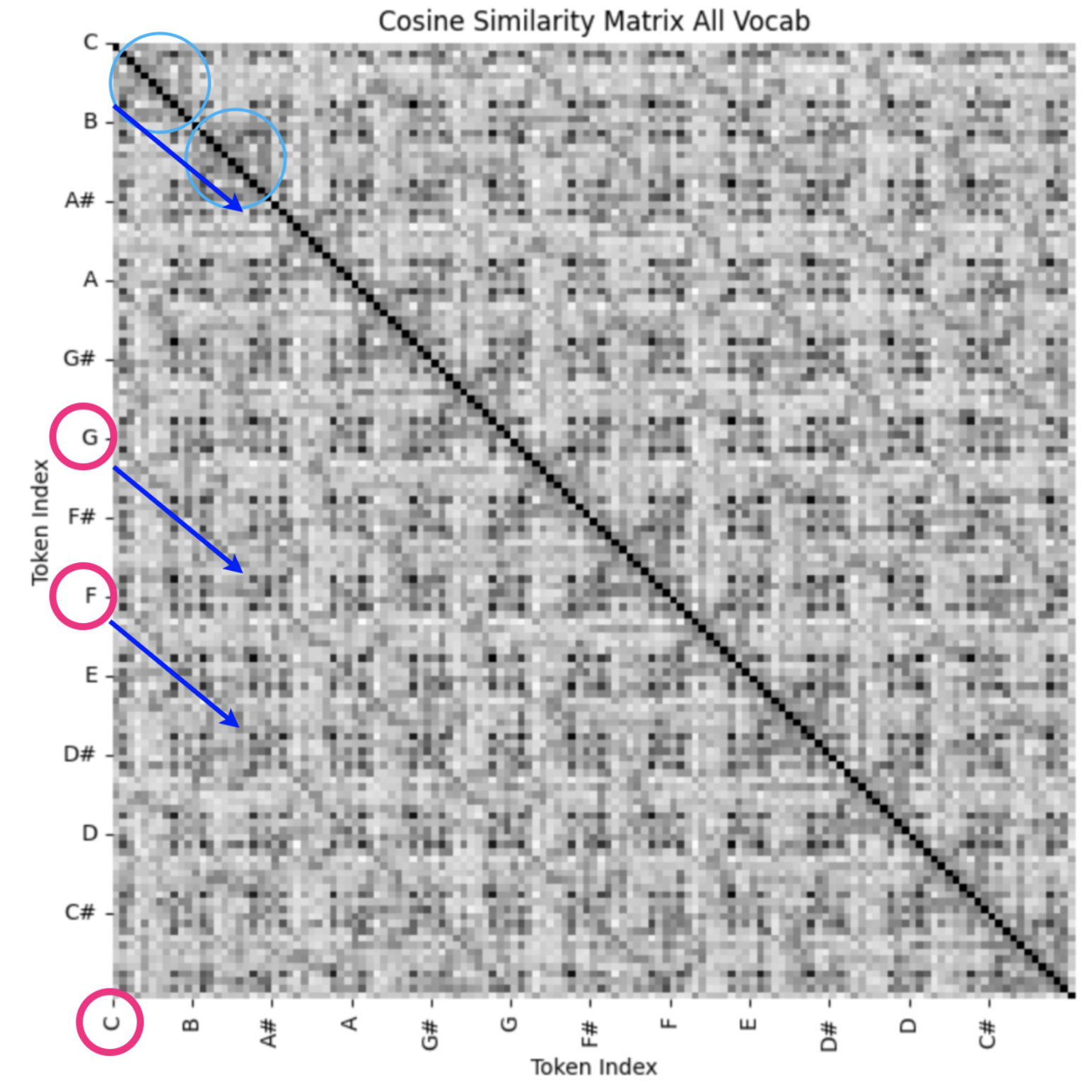
In the circle of fifths, adjacent chords are similar chords, while chords on opposite sides are distant. In NLP, similar words, such as substitutable words, are known to have high cosine similarity between their token embedding vectors.
As shown in the results below, the model learned distances between chords according to the circle of fifths without additional information.
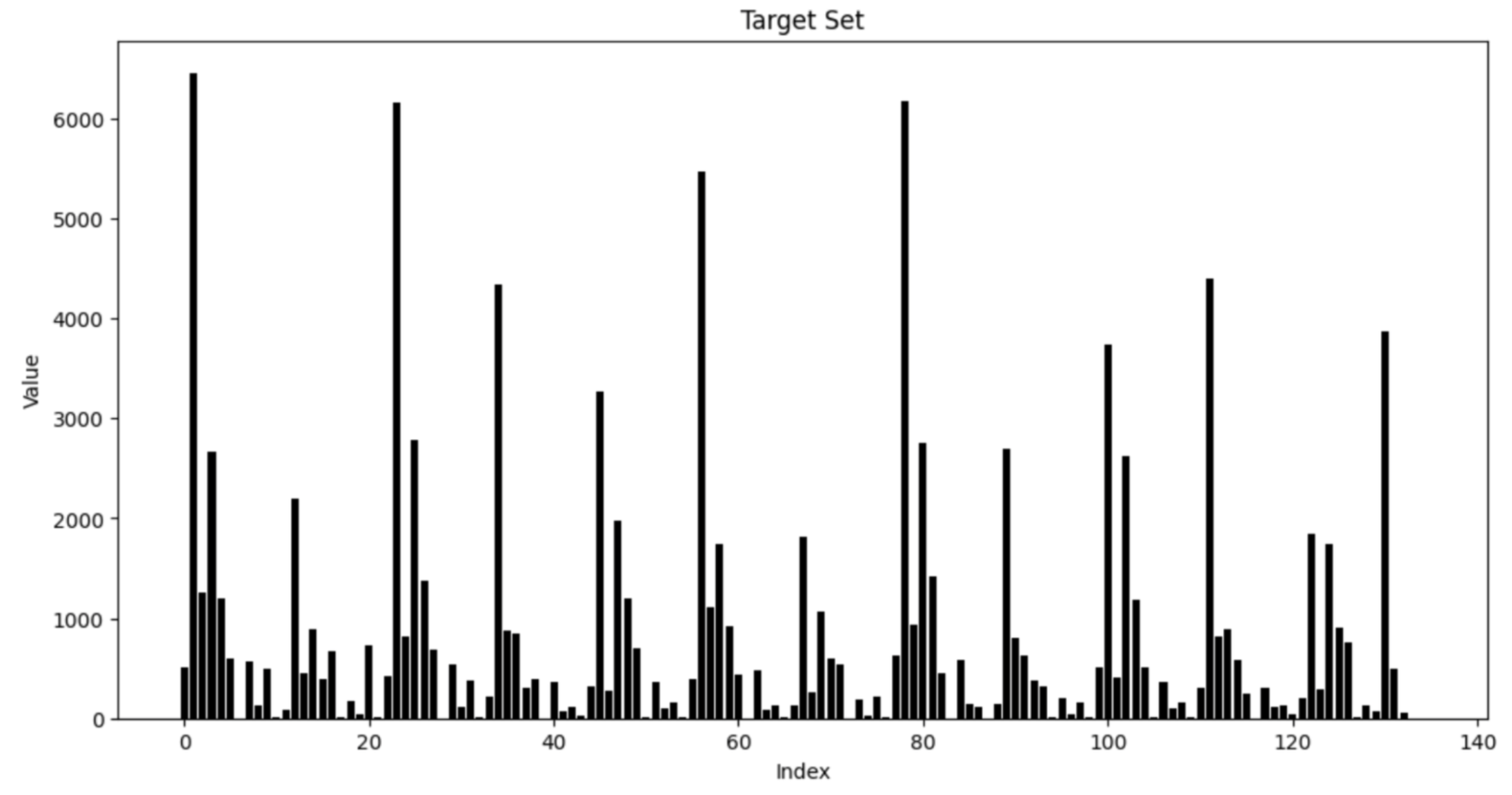
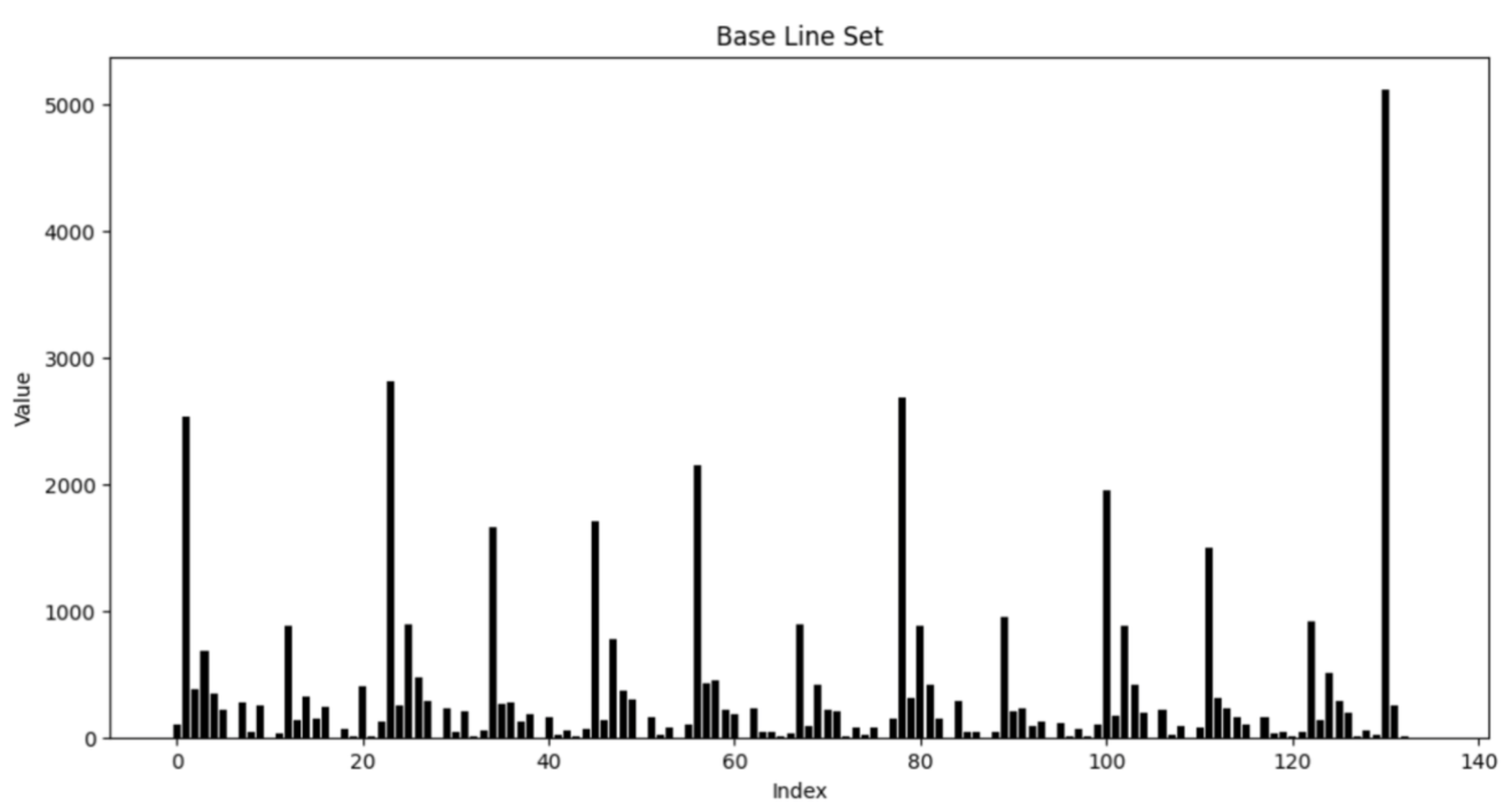
Generated Chord Distribution
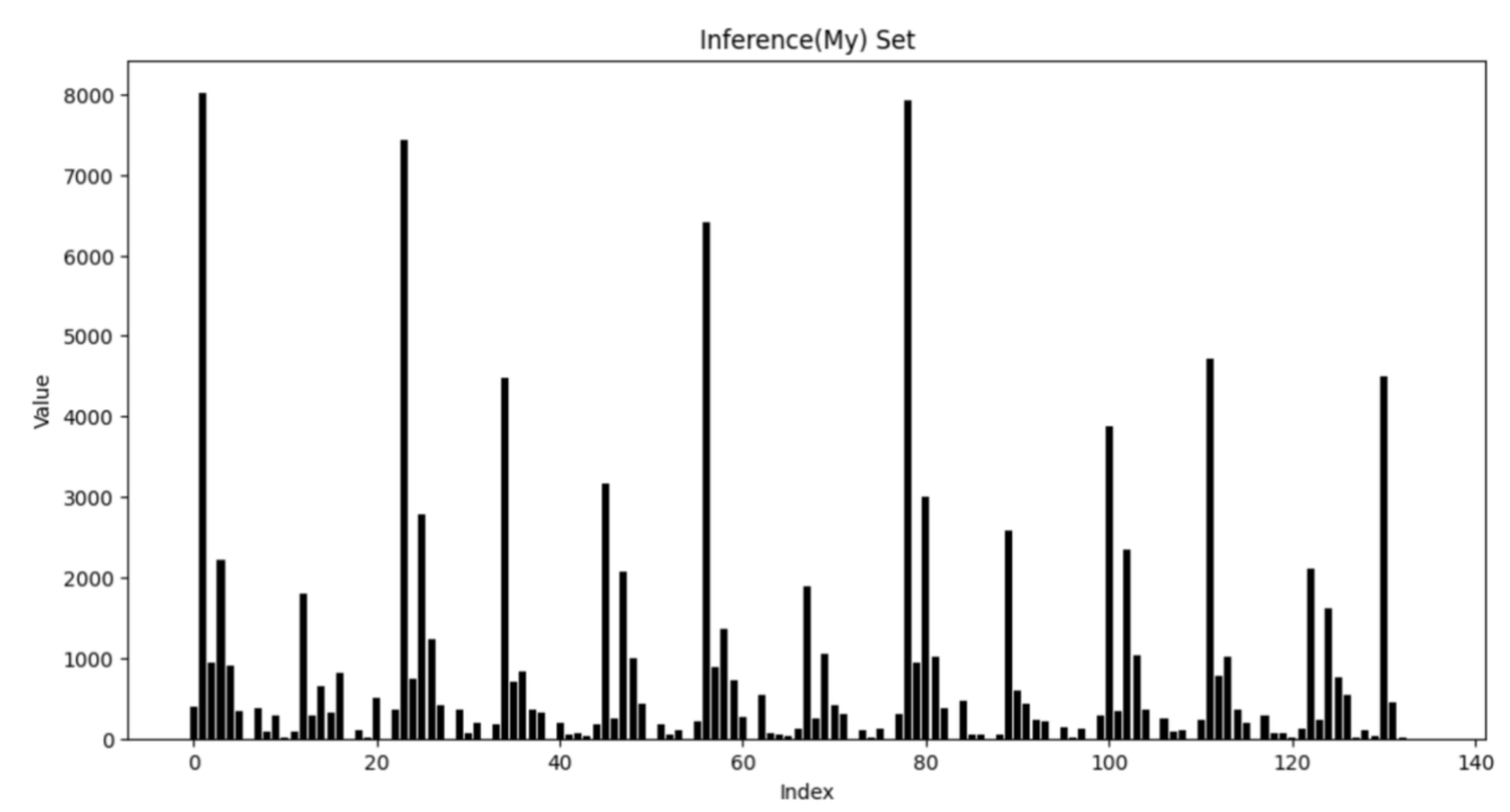
As shown below, the generated chord distribution matched the test set better than the baseline.
Efficiency - Chord BPE
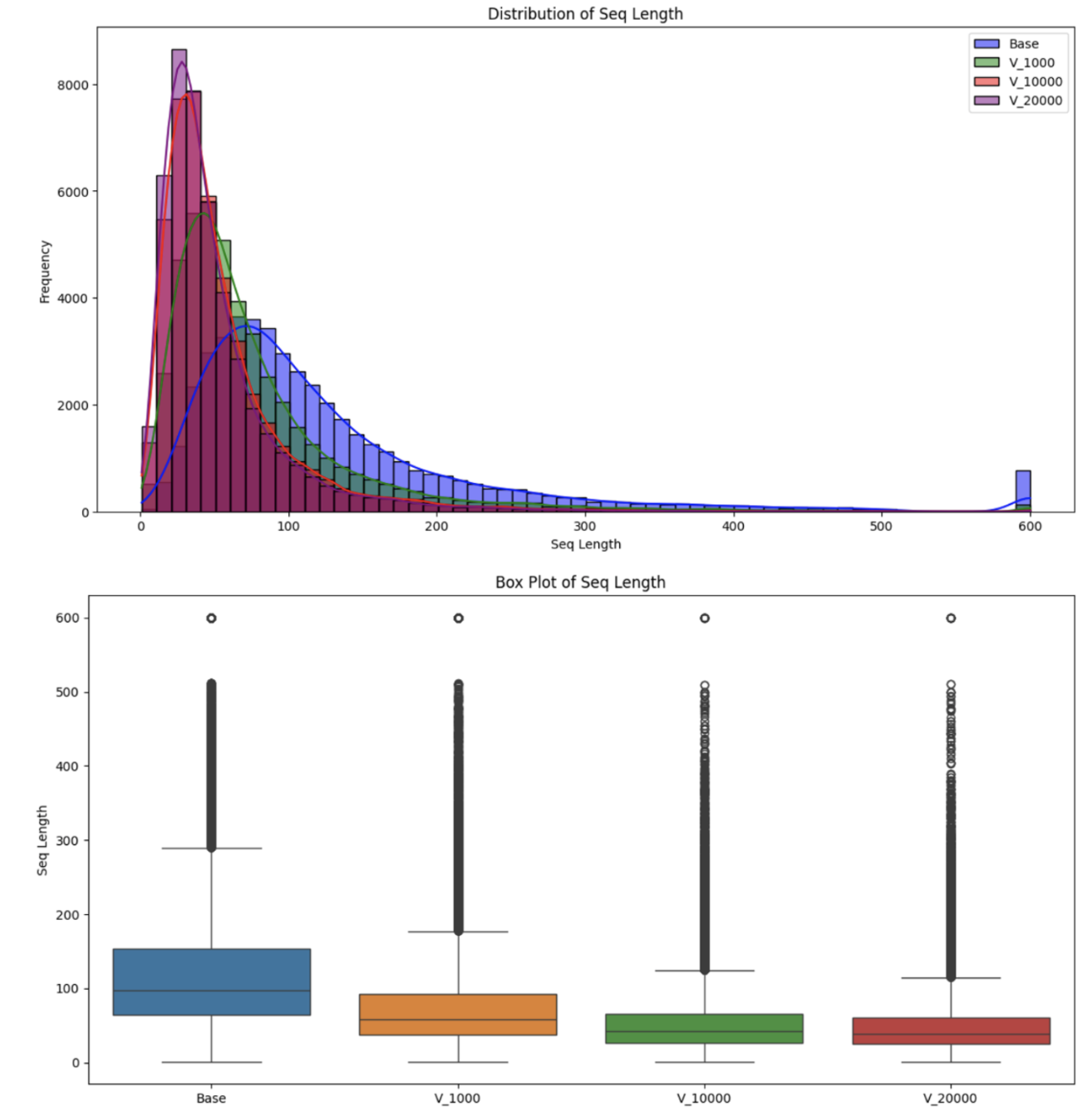
Classical music can extend to about 700 measures when the piece is long. I also thought that chords carry more meaning as progressions within a phrase than as isolated sequential units.
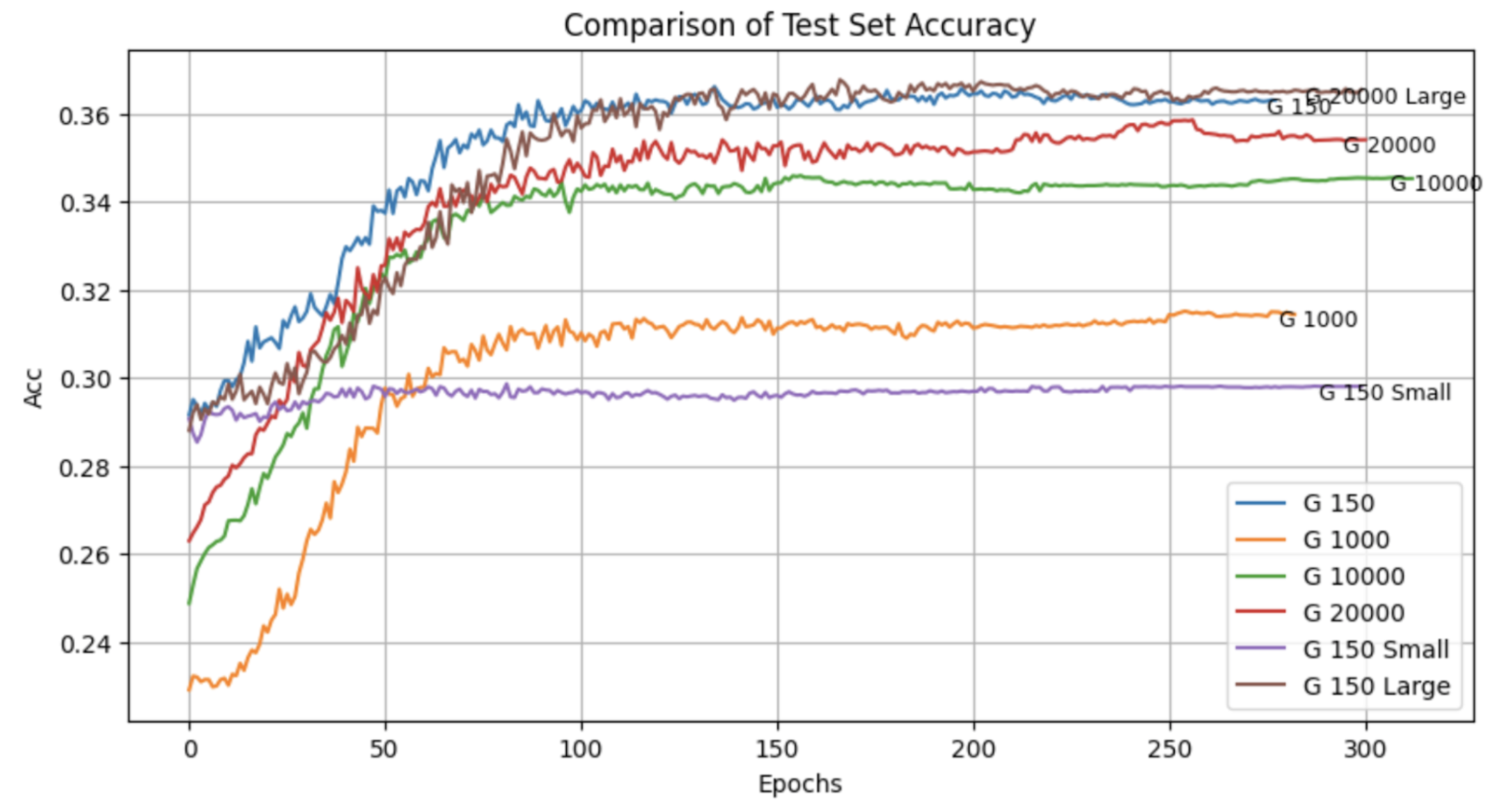
Therefore, to extract a meaningful corpus, I applied Byte Pair Encoding, commonly used in NLP, to the dataset and showed that performance remained similar even while the sequence length was reduced.
This makes it possible to compress long sequence data.
Future Work
Instrument Candidate Phase
After the chord progression, or number of measures, is determined, this stage selects the instruments that will be played in each measure. The factors determining the participating instrument types are:
- Chord changes
- Position within the current piece
- Type of instrument played immediately before
I considered the position within the current piece to be important.
This is because forms such as A-B-A, Sonata, Rondo, and Canon show patterns that repeat at certain proportions of the full length, regardless of the absolute length of the piece.
Therefore, to inform the model of “2. Position within the current piece,” I proposed dividing the full length by ratio and quantizing it for positional encoding.
Experiments comparing models with and without QPE are currently in progress.
Next Research Plan
Instrument Candidate Phase
Find a fitting structure
Analyze instrument embedding relations
Rhythm Phase
Find a fitting structure
Efficient tokenization of onset position and duration
Note Assign Phase
Find a fitting structure
Assign notes to the chord-based generated rhythm
Downstream Task Evaluation
Experiment with and propose various metrics, then compare against baselines and other models
Compare downstream tasks such as composer classification and plagiarism checking
Writing
Target submission to the AI, Art & Creative Track of IJCAI (International Joint Conference on Artificial Intelligence) in January